Table of Contents
User Generated Content Campaign Best Practices That Drive Growth
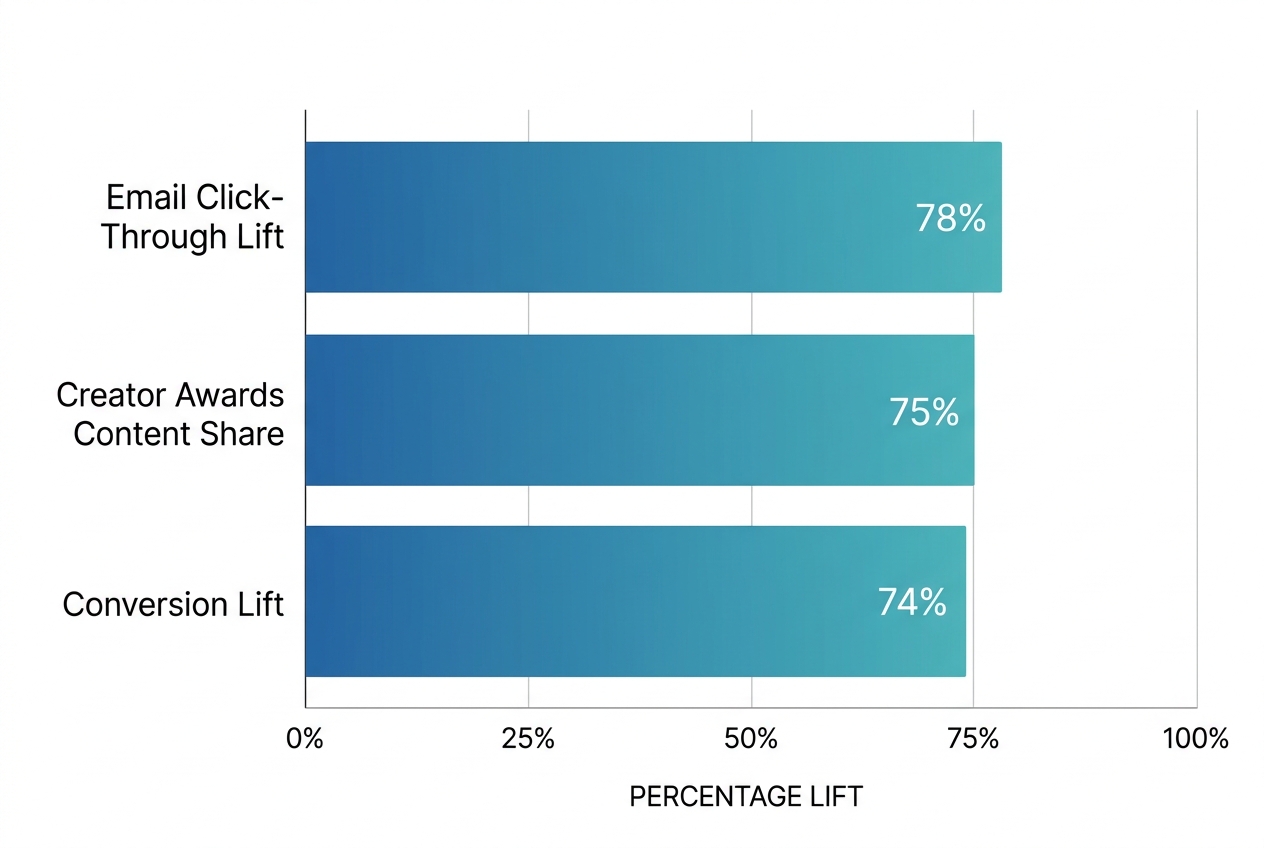
A user generated content campaign best practices framework turns those scattered posts into a repeatable engine for growth by closing the gap between widespread use of UGC and strategically implementing it. While 87% of brands are now using UGC, only 16% have a dedicated strategy, leaving measurable impact untapped. With product pages converting 74% higher when UGC is used, and email campaigns with UGC clicking 78% more, it’s becoming apparent that there’s cross-channel value. With AI search engines being populated with customer reviews and social proof, the stakes for systematic UGC programs grow even higher. Every successful campaign needs a purpose: set goals to guide your collection, curation, rights and distribution in order to get results.
Key Takeaways
- In order for a user generated content campaign best practices initiative to be successful, you need defined goals, not just unstructured tactics.
- The best practice for a user generated content campaign is to remove all possible barriers to your audience reaching the submit button.
- Even effortless contribution flows stall without a compelling reason to participate.
- Securing rights before repurposing creator content is one of the core user generated content campaign best practices, even when creators are motivated to participate, they expect their rights to be respected.
- Rights-cleared UGC is there to go, yet it only makes waves when it's prepared for the format it's destined for.
1. Start With Clear Goals
In order for a user generated content campaign best practices initiative to be successful, you need defined goals, not just unstructured tactics. The truth is, the numbers say it all: while 87% of brands use UGC, a mere 16% do so with a formal strategy, leaving most campaigns aimless and without any way to measure success or failure.
Goals shape every single decision made within a UGC program. If you want conversions, content quantity or brand awareness, your goal will determine which channels to use and how to measure success.
For example, GoPro’s UGC awards program set out to source content at scale and cut production costs, so the brand now provides 75% of its published content and has saved an estimated $30 million in production expenses.
Here’s a short list you can follow when setting goals: pick one main objective, establish a number, decide on the right metric, and make sure you have your rights and consents in place to back up this goal before you launch.
2. Make Contributing Effortless
The best practice for a user generated content campaign is to remove all possible barriers to your audience reaching the submit button. Instead of thinking of contribution as a one-off ask, we encourage brands to think of this as a repeatable process, since only 16% of brands have a dedicated UGC strategy when 87% are using UGC in some way.
Just make it simple: give your customers a clear creative brief, tell them exactly where to post their photos and videos, and reply to every submission within hours. GoPro's well-structured awards program provides around 75% of its published content and saves the company approximately $30 million on production costs, showing that an easy-to-follow system can be your main source of content.
Make sure to include consent within the submission process. Social mentions don't mean you have commercial rights, so ask for written permission if you want to repurpose any user-generated content. This tiny step will keep your program compliant and your contributors happy.
3. Motivate Creators With Meaningful Rewards
Even effortless contribution flows stall without a compelling reason to participate. Among user generated content campaign best practices, meaningful rewards rank high because creators respond to recognition, exposure, and tangible appreciation. Public recognition, awards programs, and featuring creators’ work turn occasional contributors into long-term partners.
The awards program is a powerful example of how to apply structured incentives. Approximately 75% of its published content comes from users and they've saved around $30 million on production costs, showing that recognition can replace paid production at scale. Product pages featuring UGC convert 74% higher, and email campaigns with UGC see a 78% lift in click-through rates—showing that featuring creators publicly is both a reward and a performance driver.
The presence of a repeatable reward loop is what separates the 16% of brands that have a dedicated UGC strategy from the other 87% who are using UGC casually. For the creators, having their content featured in an environment where customer content is increasingly informing AI-generated search answers can help boost their visibility, making it a win-win situation.
4. Secure Rights Before Repurposing
Securing rights before repurposing creator content is one of the core user generated content campaign best practices, even when creators are motivated to participate, they expect their rights to be respected. Platforms grant non-exclusive, sub-licensable licenses to user content, but they never own the copyright, so a brand’s reuse still requires the creator’s explicit permission.
Copyright registration can strengthen enforcement: if filed within three months after publication, registration will make works eligible for statutory damages and recovery of attorneys’ fees, and acts as a practical safeguard for campaign assets. Fair use is a four-factor test (purpose, character of the work, amount taken, and effect on the market) and remains a defense but is not a substitute for obtaining permission. AI-generated materials do not have copyright protection under U.S. Law, so brands may not assume AI-assisted UGC is okay to repurpose without a careful review.
For disagreements, the Copyright Claims Board provides a simplified forum. After rights are established, we start to look at how that content needs to be adapted for each platform’s format.
Tailor Content to Each Platform
Rights-cleared UGC is there to go, yet it only makes waves when it's prepared for the format it's destined for. The same asset can be used across various formats, ranging from social feed content to product pages and email campaigns, with each needing a unique tweak to fit their channel's standards.
Product pages featuring UGC have 74% higher conversion than product pages without UGC, showing that UGC must be customized to the commerce surfaces where customers are looking for validation. Adding UGC to emails results in a 78% increase in click through rates, proving that the same asset can be more engaging if tailored to what the customer expects from their inbox. The awards program provides about 75% of its content and estimates they’ve saved $30 million on production costs by repurposing user submissions for the appropriate platforms.
After securing usage rights, adapt each asset with a simple checklist: crop or resize for the channel, match the platform’s tone, and add channel-appropriate captions or calls-to-action. This ensures the content feels native to its environment and maximizes its potential impact.
Track Metrics That Prove Impact
Measuring results is also one of the most often ignored user generated content campaign best practices. When brands do track the correct metrics, they can move past stories and report actual business results to their stakeholders.
We suggest looking at four categories of metrics. One is to track lift on product pages featuring customer-generated content (UGC), as these pages convert 74% more than pages without customer content. Another metric you can monitor is email engagement, comparing click-through rate on UGC-enabled campaigns versus those on standard sends; adding UGC to emails has increased CTR by 78%. Finally, quantify content sourcing efficiency and cost savings by tracking the share of published content that originates from customers and the production budget it displaces. The awards program supplies 75% of its published content and has saved approximately $30 million in production costs.
Blend UGC With Agentic AI
We recommend combining user-generated content with agentic AI to create a scalable, rights-cleared content pipeline that AI search systems can surface with confidence. The blend works because UGC supplies authentic, peer-created material while agentic AI handles distribution, curation, and real-time customer interactions—turning community content into measurable visibility.
According to industry data, 87% of brands use UGC but only 16% have a formal strategy. Meanwhile, LLMs increasingly ingest customer reviews to power AI-generated answers. But before brands can commercially re-use this customer content, they must receive written permission, not just mentions on social media. The awards program demonstrates the power of structuring a program around UGC, where roughly 75% of its published content is actually user generated and saving them roughly $30M in production costs. Using their program positions customer content as the engine for conversions, not merely a brand-awareness tactic, bridging the gap between authenticity and AI-era discoverability.
Turn UGC Into Conversions
As a best practice for user generated content campaigns, you should only turn collected content into conversions if it's meeting your shoppers where they decide to purchase. Whether surfaced by AI or placed by hand, UGC needs to be on product pages, landing pages, emails, etc., where purchasing decisions happen.
As per Marketful's UGC strategy guide, product page UGC converts 74% higher than product pages without UGC and adding UGC to email marketing campaigns increases click through rate by 78%. These numbers help explain why you can’t use customer generated content commercially without their explicit written consent: just because someone posted something on social doesn't mean you can use it.
Start small by selecting one high traffic page, adding a UGC proof element and then measuring the change prior to scaling up. This will turn your UGC pipeline into a measurable growth lever.
Frequently Asked Questions
How can I effectively encourage customers to create and share content for my brand?
Make contribution effortless by providing a clear creative brief and a simple submission process. Reply to every submission quickly to keep creators engaged. GoPro’s structured awards program supplies about 75% of its published content and has saved roughly $30 million in production costs by making participation straightforward and rewarding.
What are the best strategies for managing rights and permissions when repurposing user-generated content?
Secure explicit written consent from creators before commercial reuse, as social mentions do not grant rights. Copyright registration within three months of publication strengthens enforcement options. Always review fair use factors and confirm that AI-assisted content meets human authorship standards to avoid legal risks.
How should I tailor user-generated content campaigns for different social media platforms?
Adapt each asset to the channel’s format and tone by cropping or resizing, matching platform style, and adding channel-appropriate captions or calls-to-action. Product pages featuring UGC convert 74% higher, while email campaigns with UGC see a 78% lift in click-through rates when content is tailored to the medium.
What metrics should I track to measure the success of a user-generated content campaign?
Track conversion lift on product pages featuring UGC, email engagement comparing click-through rates between UGC-enabled and standard campaigns, and content sourcing efficiency by measuring the share of published content from customers and the production budget it displaces. GoPro’s program supplies about 75% of its published content and has saved roughly $30 million in production costs.
How can I integrate user-generated content into my product pages and email marketing to boost conversions?
Place UGC prominently on high-traffic product pages to validate purchases, as these pages convert 74% higher with UGC. Add UGC to emails to increase click-through rates by 78%, ensuring the content aligns with the channel’s expectations and includes clear calls-to-action.
Your Channel. Your Name. Your Rules.
The best user generated content campaign best practices come down to repeatable systems: systematic collection, explicit written rights, and a clear grasp of copyright and DMCA basics. When brands build continuous UGC programs instead of one-off campaigns, they turn every customer into a co-owner of the channel and every post into a citable asset for AI-driven discovery.
The ownership stays with the creator, while the platform has only a narrow, sub-licensable license. This distinction is why explicit written consent is non-negotiable: social mentions do not constitute commercial rights. As UGC fuels more and more AI search answers, the creators who post this content have more of the conversation, and visibility, than ever before.
Build your systematic approach today.
Put These UGC Practices to Work
You've now walked through the full framework, from setting clear goals and making contribution effortless to securing written rights before repurposing a single asset. The benchmarks we cited, like 74% higher conversion on product pages featuring UGC and a 78% email click-through lift, only matter when the process behind them is repeatable. That's why systematic collection, curation, and rights management beat one-off campaigns every time. As customer content increasingly shapes AI-generated search answers, building these workflows now positions your brand for where discovery is heading. The next step is turning this checklist into an operating rhythm you can sustain month after month. Further resources cover agentic AI, marketing automation, and content strategy. Your UGC program is ready to move from ad-hoc effort to owned system.