Table of Contents
Why Knowledge Quizzes Transform Lead Capture
This is true because we're turning passive form filling into something interactive and interesting for our leads, allowing us to take up contacts that might be interested anyway. Unlike gated content which would require someone to give their permission to gain access, this kind of tactic would fall foul with regulators such as ICO/CNIL as it is classed as an invalid way to get consent due to GDPR laws. Quizzes collect contact details voluntarily, ensuring the consent is freely given and compliant.
This type of voluntary engagement makes the survey takers better-quality leads compared with other leads, since their interest aligns with our offerings and they are more likely to convert. The quizzes also give us something we control, a channel they can't take from you, giving us a durable, owned asset in a landscape where third-party platforms can disappear overnight.
Lead capture with quiz helps to get better quality prospects who have already decided to be involved in what we offer.
Key Takeaways
- Quizzes aren't only about capturing leads; they can also change those potential buyers into leads.
- The timing of your lead-capture form in a quiz matters as much as its design.
- A well-placed form or quiz is only half the job; what you do with each response determines whether follow-up is efficient or chaotic.
- Interactive quizzes represent the opposite approach when compared to traditional “static” lead magnets such as gated PDFs, checklists, ebooks, or one-way webinars.
- As a contact finishes the Knowledge Quiz Funnel, our AI reps jump into action and put together the first message in this series.
1. Attract Higher-Quality Leads
Quizzes aren't only about capturing leads; they can also change those potential buyers into leads. If someone answers your questionnaire, they have already declared that they have some level of interest, have certain qualities needed in order to be considered as prospects, and will freely give away their name and e-mail address. The process itself weeds out the casual browsers and low-interest form fillers.
Using knowledge quizzes for lead generation works well since their answers serve as a miniature qualification test. These answers show you what each potential client values, how much they already know on the topic, and where they may be lacking knowledge, therefore making the next conversation have a warm-up and relevance that is missing from a typical “sign up here” sign.
This will allow us to talk better, converting prospects into customers more quickly. But here's what we need to understand now. We have to capture these high quality leads at the right time, before we're too late.
2. Place Your Form at the Perfect Moment
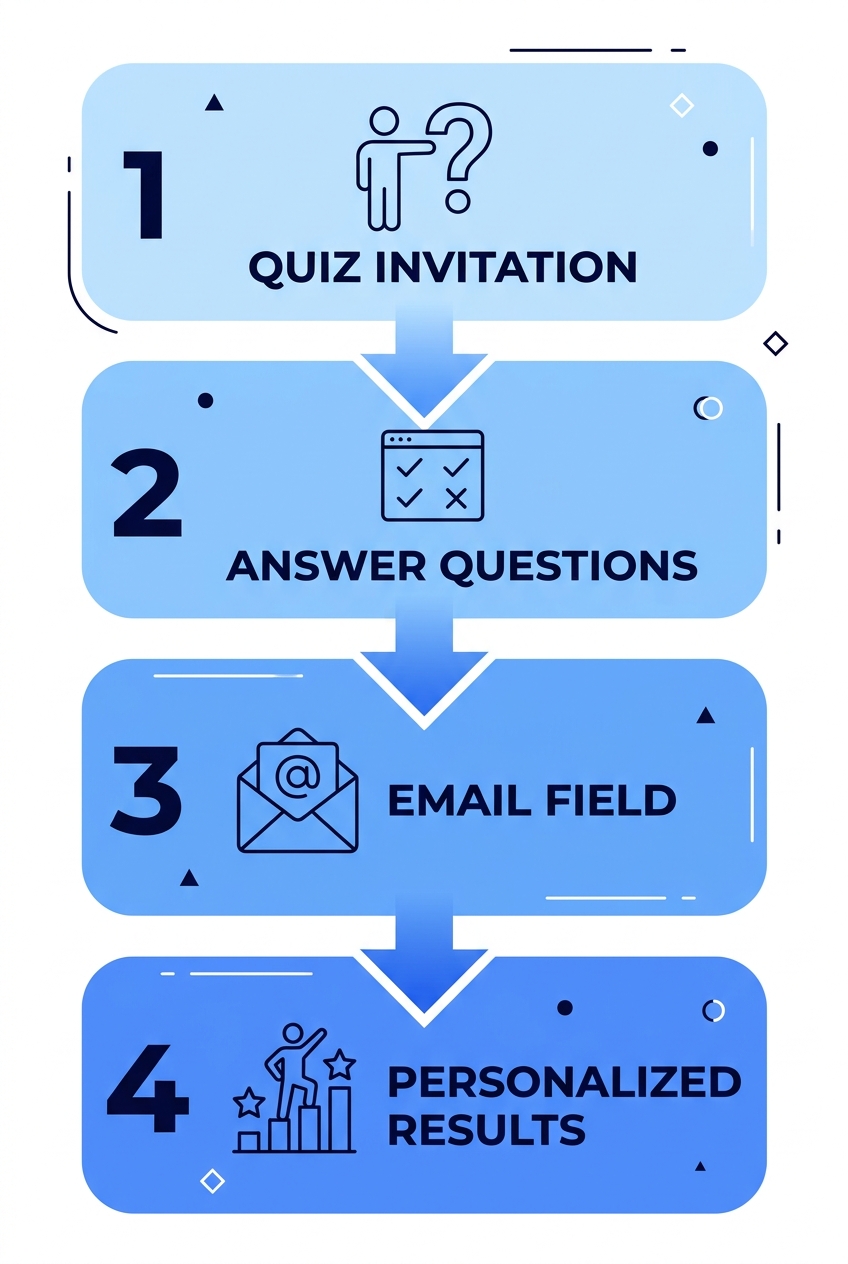
The timing of your lead-capture form in a quiz matters as much as its design. Once visitors start answering questions, their investment grows—making the moment before they see personalized results the ideal spot to ask for their email.
To fix this: add the form beneath your final question on each path, place the email field where you want someone’s attention to shift to in order to give them access to what they have earned in return for answering all of those other questions. Make sure people don’t have to reveal who they are until after giving information on anything else on the survey.
Capturing them in time is just the beginning. What happens from there, how these leads get sorted before we even start reaching out to them, sets up all of our future conversations about that lead.
3. Segment Leads Before You Ever Follow Up
A well-placed form or quiz is only half the job; what you do with each response determines whether follow-up is efficient or chaotic. By segmenting leads at the point of capture, we turn raw submissions into a prioritized queue before anyone on the team even opens the CRM.
Using segmentation levers we can branch on certain questions, have them self select their response, use conditional logic, add in intent based tags all to make each response act like another piece of data. Whether it's just a basic form or an interactive quiz, we are still directing our leads down different paths that allow us to bucket people as being ready to buy, researching what we're offering, or not for some reason. All without having to manually triage them.
The payoff is immediate. Sales teams start from a prioritized list, wrong-fit leads are filtered or placed on a nurture track, and highest-value prospects receive faster responses. This is how using knowledge quizzes for lead generation transforms a scattershot follow-up process into a streamlined, conversion-ready pipeline.
Outperform Traditional Lead Magnets
Interactive quizzes represent the opposite approach when compared to traditional “static” lead magnets such as gated PDFs, checklists, ebooks, or one-way webinars. Instead of asking leads to pay their attention in exchange for one-time consumption of static information that they would often quickly forget about, these knowledge tests actually turn this interaction into something more dynamic, i.e., a two-way communication where leads have to answer certain questions and receive immediate and personal responses as well. Static materials can’t offer any kind of feedback whatsoever.
This happens because each individual quiz answer can be used as a signal in our lead segmentation process, meaning we know much more about them than just filling out a download form does. While quizzes still demand thoughtful questions and honest scoring to work well, the result is a lead profile that's far more qualified for ai-driven follow-up than a static magnet ever produces. This makes quiz-style lead magnets a smarter choice for capturing leads who are ready for personalized automation.
5. Personalize Follow-Up With AI Automation
As a contact finishes the Knowledge Quiz Funnel, our AI reps jump into action and put together the first message in this series. Rather than following a rigid drip sequence, GIGI selects tone, timing, and next steps based on the contact’s specific answers, creating a conversation that feels tailored from the start.
Beyond the first email, our AI agents can pick up on customer responses to answer follow-up questions based on how you want them to sound. Every response will keep the conversation consistent, and doesn’t require any effort from the rest of your team.
Personalizing the follow-up is just part of the story: the next bit is allowing ai to score each lead automatically, enabling you to target the ones most worthwhile with sales.
Qualify Every Lead Automatically
Imagine wasting hours every week sorting through an endless stream of inbound leads while warm prospects cool off in our queues. By automating this whole process, the system can use AI to score each contact against your criteria in real time, placing them into 'hot', 'warm', or nurture tiers without a single manual review.
Set up rules that allow the AI to spot specific signals you’ve set, be they responses to your top three questions, mentions of urgency or budget suitability, repeated visits, or form engagement. Then have hot leads automatically forwarded on to your team while cooler ones get placed in a pipeline where they stay engaged until they’re ready to make their purchase decision. Although this does speed things along, it’s wise to occasionally review any ‘edge’ cases which don’t quite fit, tweak the criteria as required and keep refining the model according to how your business evolves.
Make sure that you write out those three qualifying questions today, before you configure any sort of automation. That will help to ensure that they're going to be turned into actual conversations.
7. Structure Quizzes That Convert
The effectiveness of your survey relies heavily upon how it is laid out before you have collected any leads from it. Our quizzes are designed to keep respondents engaged from start to finish by focusing on a single problem the audience cares about and sequencing questions that build curiosity without asking for contact details up front.
We employ short, multiple choice or this-or-that questions in tiny sections to help people quickly complete those, resulting in continued movement as the next section loads. To reward our respondents for completing each mini-section, we show results and scores right on the page. We utilize the answers provided here to build simple segments that inform how we ask follow-up questions once all of the sections have been completed.
This means there should be a smooth flow between steps as well as in between segments based on what answer they gave. Do not create dead ends that stop them from continuing further down their path. The purpose is also to make sure we have the necessary information for each response to then get signed off on at the end.
Capture Compliant Consent From Question One
Quiz is built upon trust, and trust begins with valid consent. This means that consent under GDPR must be freely given, specific, and informed — it cannot be bundled with gated content or assumed from event badge scans.
Lead lists purchased through data brokers commonly fail to meet this requirement, because they must be able to show that their source obtained them legally. Likewise, scanning a badge at an event to add someone’s contact information to a marketing database would not constitute consent for future outreach, since the original purpose was to attend the event, not to provide a company’s email address list to marketers. Using these techniques fails the freely-given requirement and leaves companies open to regulatory action.
At each point in our quiz process that serves to generate leads, we also have a Fair Processing Notice so that people understand what happens to their data. As soon as they give permission, then every subsequent answer is part of a direct relationship with us.
Frequently Asked Questions
How do knowledge quizzes help capture higher-quality leads compared to static forms?
Knowledge quizzes capture leads who have already shown interest by answering questions, filtering out casual browsers. Their responses reveal preferences, knowledge levels, and intent, making each lead more qualified than a static form submission. This voluntary engagement ensures consent is freely given and compliant with privacy laws.
At what point in a knowledge quiz should I place a lead generation form to maximize opt-in rates?
Place the lead generation form just before showing personalized results, once respondents have invested effort in answering questions. This timing leverages their engagement to increase opt-in rates while keeping the process compliant and user-focused.
How can AI-powered platforms use quiz responses to personalize follow-up marketing automation?
AI platforms like hashtag.org's GIGI agents analyze quiz responses to tailor the first message and subsequent interactions based on the contact's answers. This creates a personalized conversation that feels relevant and consistent without manual intervention.
What are the best practices for structuring quiz questions to effectively segment potential leads?
Structure quizzes with short, multiple-choice questions grouped by topic to maintain engagement. Use conditional logic and intent-based tags to segment leads based on their answers, ensuring responses guide them into appropriate follow-up paths.
Why do knowledge quizzes often outperform traditional lead magnets in conversion rates?
Knowledge quizzes turn passive interactions into dynamic two-way conversations, providing immediate feedback and personalization. This active engagement yields more qualified leads than static gated content, which often fails to capture sustained interest or compliance.
Turn Every Quiz Answer Into an Owned Relationship
When using a knowledge quiz for your lead generation efforts, it doesn’t just collect information—it starts a relationship that belongs to you. Every answer a prospective lead provides is equivalent to sending out the first sign that, when dealt with properly, may result in a fully-owned and consensual relationship as opposed to rented reach.
This is based on the fact that your leads should be based on freely given, specific and informed consent for data to be processed and also, therefore used as marketing contacts. By providing fair processing disclosure at every capture point you keep transparency intact, and over time these relationships compound, turning signals into owned assets you control. This approach avoids the pitfalls of gated content, purchased lead lists, or badge scanning without explicit consent.
Create quizzes that conform with the consent rules from the start to build a relationship based on trust and compliance between you and your prospects.
Build Your First Lead Quiz
You now have a complete blueprint for using knowledge quizzes for lead generation — from placing your form at the right moment to segmenting every lead before follow-up begins. The next step is turning that blueprint into a quiz that captures consent and data you actually own. AI agents can take those quiz answers and personalize the entire follow-up conversation for you, qualifying each lead automatically before your team ever picks up the phone. hashtag.org offers AI lead generation and automation workflows built around exactly this principle, with GIGI agents that carry conversations in your own voice. Getting started is straightforward, and support responds within one business day if you have questions along the way. Explore the service options and see how an agentic workflow could fit the quiz funnel you've just learned to design.